
Top-Rated Foundation Repair Solutions For Long-Term Stability
Choose from proven products that ensure your foundation remains strong and secure over time.
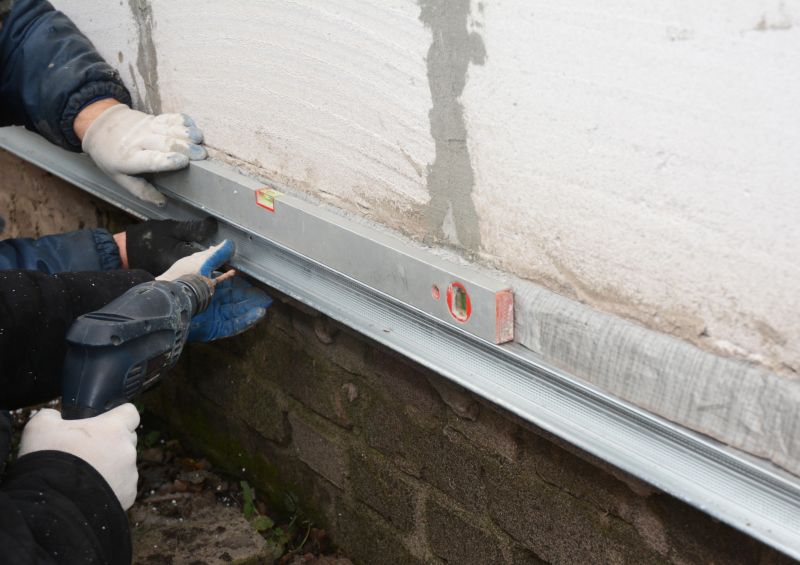 Foundation repairs are a critical aspect of maintaining the structural integrity of a building, especially in areas prone to soil shifting, moisture changes, or settling issues. When considering products for foundation repairs, it is important to understand the variety of solutions available to address different types of foundation problems. These solutions can include stabilization methods, crack injections, underpinning, and waterproofing, among others. Proper selection and application of these products can help prevent further damage and extend the lifespan of a structure.
Top Overall Option
Polyurethane Foam Injection System
Polyurethane foam injection systems are versatile products used to stabilize and lift sunken or uneven foundations. They expand upon application to fill voids and cracks, providing immediate support and helping to halt further settlement. These systems are valued for their quick curing times, minimally invasive application, and ability to conform to irregular spaces. They are suitable for a variety of foundation types and can be used to address issues such as basement leaks, cracks, and soil settlement. Proper application by trained professionals ensures optimal results and long-term stability.
Types of Products For Foundation Repairs
Epoxy Injection Kits
Used primarily for sealing cracks and restoring structural integrity in concrete foundations, epoxy injection kits are popular for their strong bonding capabilities and durability.
Polyurethane Foam
These expanding foams are effective for filling voids, sealing cracks, and lifting settled slabs with minimal disruption.
Steel Push Piers
Steel push piers are driven beneath the foundation to provide stable support, especially in cases of severe settlement.
Helical Piers
Helical piers are screw-like devices installed into stable soil layers to support and stabilize foundations.
Underpinning Plates
Used to reinforce or extend existing foundation footings, underpinning plates help distribute loads more evenly.
Concrete Jacking and Lifting Systems
These systems lift and level sunken concrete slabs or basement floors, restoring proper alignment.
Waterproofing Membranes
Applied to exterior or interior foundation surfaces, waterproofing membranes prevent water intrusion and protect against moisture-related issues.
Soil Stabilization Products
Chemical stabilizers and grouts improve soil bearing capacity, reducing settlement risks.
Grout and Mortar Patches
Used for filling small cracks and voids in concrete structures to prevent water ingress and further deterioration.
Foundation Anchors
Anchors secure the foundation to stable soil or bedrock, providing additional stability.
Drainage Systems
Proper drainage products help manage water around the foundation, reducing hydrostatic pressure and soil erosion.
Vapor Barriers
Installed beneath slabs or within crawl spaces, vapor barriers control moisture migration and prevent mold growth.
Popular Choices
Commonly used for sealing foundation cracks, these kits are favored for their ease of use and effective sealing properties.
A widely selected solution for lifting and stabilizing settled slabs and filling voids.
Popular for their strength and ability to support severely settled foundations.
Chosen for their ability to reach deep stable soil layers and provide long-term support.
Frequently installed to prevent water intrusion and protect foundation surfaces.
A common method for extending or reinforcing existing foundations, especially in cases of significant settlement.
Used to raise and level uneven concrete slabs with minimal excavation.
Popular for improving soil load-bearing capacity in problematic areas.
Effective in managing excess water around the foundation to prevent future issues.
Commonly installed in crawl spaces to control moisture and improve energy efficiency.
In Mount Vernon, IL, homeowners and contractors often seek reliable foundation repair products that are suitable for the local soil conditions and climate. The right products can vary based on the specific issue, such as foundation settling, cracking, or water intrusion. Consulting with a foundation specialist can help determine the most appropriate solutions, but having a good understanding of available products can also empower property owners to make informed decisions.
Foundation repair products are designed to be durable and effective, often incorporating advanced materials like high-strength epoxy, polyurethane foam, or steel reinforcement. These products are typically easy to apply and can be used in various scenarios, from small cracks to major underpinning projects. Proper installation, however, is crucial to ensure the longevity and effectiveness of the repair, which is why professional guidance is often recommended.
Choosing the right foundation repair products involves considering factors such as the severity of the damage, the type of foundation, accessibility, and budget constraints. With a wide array of solutions on the market, understanding the purpose and limitations of each product type can help property owners and contractors select the most suitable options for their specific needs.
Key Buying Considerations
- Assess the severity and type of foundation problem to determine appropriate products.
- Consider the foundation material, such as concrete, brick, or stone, for compatibility.
- Evaluate the soil conditions and moisture levels in the area to select suitable stabilization methods.
- Determine whether the repair requires lifting, stabilization, crack sealing, or waterproofing.
- Check the product's curing time and ease of application to fit project timelines.
- Review the durability and load-bearing capacity of the repair products.
- Ensure the products are designed for the specific foundation type and problem scale.
- Consider professional installation requirements and whether DIY options are feasible.
- Compare warranties or guarantees offered with the products for added assurance.
- Factor in the environmental conditions of Mount Vernon, IL, such as humidity and soil type.
- Budget constraints should be balanced with the longevity and effectiveness of the repair solutions.
- Look for products with clear instructions and safety guidelines for proper use.
- Verify compatibility with existing foundation materials and structures.
- Assess the potential impact on property value and future maintenance needs.
- Consult local building codes and regulations to ensure compliance with repair methods.